(985) 969-0055
2501 Hwy 190 East Service Rd
Covington, LA 70433
Frequently Asked Questions About Portable Buildings, Sheds, Cabins, Garages, Carports, and Metal Buildings
Do I need a permit for my new building or covering?
Most likely you do need a permit. And, it is your responsibility to ensure all necessary approvals, clearances, and authorizations are in place. Specifically, you should contact your local city and parish agencies to discuss zoning, permits, setbacks, and covenants. It is also recommended that you contact your Home Owners Association (if you have one) to determine what association rules and regulations may apply to your situation.
Whether the answer is yes or no in your specific case, this is one of those questions about portable buildings, sheds, cabins, carports, metal buildings, etc. that you must get answered.
What is Rent-To-Own?
Rent-To-Own is a monthly payment program whereby anyone can become the owner of a building or covering in a period of 2-5 years depending upon which term they select. This is far better than paying for a storage unit or leasing someone else’s building and never owning any of it.
It is important to note that Rent-To-Own is not “financing”. Rather, part of each monthly payment increases your ownership share of your building or covering. And, part of each monthly payment is a rental payment to the investors’ whose money was used to buy the materials from various vendors, ship the materials to the factory, pay the builders at the factory, pay the transporters, and everything and everyone else involved in getting your building built and delivered to your property for a small down payment.
Now, how much the rental fee portion is depends upon how long you are tying up the investors’ money. So, a shorter term Rent-To-Own option will have a higher monthly payment but lower rental fees because you are returning investors’ money back to them sooner. Conversely, a longer term Rent-To-Own option will have a lower monthly payment but higher rental frees because you are tying up investors’ money for a longer period of time.
That said, the Rent-To-Own partners we use at Johnson Portable Buildings in Covington, LA, allow you to pay extra on months when you can afford to. And/or you can pay off your building or covering early if you come into some extra money. Whether paying extra or paying off early, there are no penalties or fees.
Also, with our Rent-To-Own partners, there is no credit checking or reporting. This means you CAN get a building or covering even if you have bad credit…as long as you have the financial ability to make your monthly payment and a place to put your building.
In short, Rent-To-Own is a wonderful option because it let’s people become building owners who would otherwise be blocked by traditional financing options.
Do you have buildings and coverings I can look at?
Yes, we have various building and covering styles and sizes on our sales lot. We invite and encourage you to come take a look for two reasons. One, you can see for yourself that our buildings are in a class by themselves compared to other options. Two, by seeing different styles and sizes in person, you can get a better sense of what you want and need. As an illustration, customers sometimes come in with a certain style and size in mind. But after seeing our buildings or coverings, they realize that a different style or size would better suit their needs.
Note that all of the wood buildings on our lot are available for purchase. The metal carports and buildings are for display only.
You sell both wood and metal buildings. Which is better?
Each has its advantages and disadvantages. Ultimately, the best choice depends upon how you are going to be using your building. But at a general level, following are some pros and cons to be aware of.
Metal buildings are generally lower maintenance and best in termite infested areas. Wood buildings are generally stronger and more attractive.
Wood buildings range in size from 8′ wide to 16′ wide and 12′ long to 50′ long. Metal buildings range in size from 10′ wide to 50′ wide and can be any length you want…although our metal buildings designer only goes up to 350′.
Enclosed metal buildings…especially ones installed on raw ground or gravel…tend to hold heat and humidity which can adversely affect things stored inside the metal building. In contrast, wood buildings come with venting systems (ridge cap vents and soffit vents) that wick out the heat and humidity which is better for things stored inside the building.
Both wood and metal buildings come with a wide variety of color options for the roof color, primary side color, and trim color.
I want a wood building but I am concerned about termites. Any suggestions?
Let’s start with this: Science tells us that termites eat wood because it’s their primary food source. More specifically, wood is rich in cellulose, a complex carbohydrate in plant cell walls, which provides termites with essential nutrients and energy. Moreover, termites rely on symbiotic microorganisms (protozoa, bacteria) in their gut to break down this indigestible cellulose into sugars, a process that also fuels colony growth and nest building, making wood both a delicacy and a vital resource. Wood also serves as their shelter because it provides a sturdy, accessible place to build tunnels, store eggs, and expand their colonies. And finally, termites need moisture. That’s why the first choice for termites is decaying, damp wood with fungal growth.
With that said, if you want a wood building but are in an area where termites have been detected, then we suggest three things:
1) Upgrade the interior floor plate and wall studs to treated lumber. Treated lumber isn’t as pretty as the “white wood” that is normally used inside a wood building. But, termites really do not like treated wood and will avoid it unless there is absolutely no other wood to be had anywhere else. And with all the trees we have in our area, there is always wood somewhere else to be had.
2) Put termite shields over the concrete blocks that hold your wood building up off the ground. With termite shields in place, termites are blocked from getting up to your building.
3) Spray and/or bait for termites around your building as your final form of defense and protection.
Which is better: a shingle roof or a metal roof?
Shingle roofs are usually purchased because a person prefers the classier look of architectural shingles. Or, because shingles are required by their homeowner’s association rules. The downsides to shingles are two-fold. One, shingles are more susceptible to wind and/or hail damage. Two, shingles on a portable building typically must be replaced every 15 to 20 years.
Metal roofs are the most popular choice because they last longer, are more wind resistant, and are easier to clean.
Bottom line, people who care about appearances usually go with a shingled roof while people who care about simplicity usually go with a metal roof.
Do I need a concrete slab or a gravel pad?
For wood buildings, no slab or pad is needed because they are built with their own treated wood floor built on top of treated wood skids. On your end, you provide a specified number of concrete blocks and have them on hand for our delivery people. On our end, our delivery people will set up your building on top of the concrete blocks you provided and will level your building for you.
If you have an existing concrete slab, asphalt slab, or gravel pad, our delivery crews can set and level your building (with its own floor system) on top of your slab or pad. However, they do not anchor buildings on slabs because we cannot control what the existing concrete or asphalt will do when subjected to drilling pressure. Similarly, they do not anchor buildings on packed gravel pads because it is too hard to drill through.
With regard to metal carports and buildings, they can be installed directly on the ground or on top of gravel, asphalt, or concrete. It is entirely your choice.
What site preparations are needed for my building or structure?
Usually, no special site preparations are needed for wood buildings and pavilions. We will set up and level your building on top of concrete pads (that you provide) and treated wood blocks and shims (that we provide).
Relative to carports and metal buildings, your structure can be built directly on the ground or on top of gravel, asphalt, or concrete. Obviously, if you choose gravel, asphalt, or concrete, then the corresponding site preparation is required.
Still speaking of carports and metal buildings, note that it saves you money if your structure goes on level ground or a level slab. To be considered “level”, your ground or slab should be within 3 inches of level in all directions. If there is more than a 3 inch variance across the area where you want your structure, then the installation crew will need to cut the legs of your structure on site which is an additional cost.
In the realm of questions about portable buildings, sheds, cabins, carports, covers, metal buildings, barns, garages, and so on, it is wise to consider this question. To illustrate, consider a metal garage. The functionality and appearance is dramatically different when a garage is installed on a concrete slab compared to when it is installed on raw ground.
Do you anchor your buildings and covers?
Yes. More specifically, carports and metal buildings are always anchored unless you specify otherwise. The type of anchor depends upon the type of foundation your structure is being installed on top of. In contrast, wood buildings are anchored if you purchase that option…as long as your building is going on penetrable ground. Wood buildings are not anchored on hard-pan ground, packed gravel, asphalt, or concrete.
This is one of the important questions about portable buildings, sheds, cabins, carports, covers, metal buildings, barns, garages, and so on.
If I get a building, how will you get it into my yard?
This is one of those common questions about portable buildings, sheds, cabins, and other such wood buildings because people are not familiar with how they are transported and moved. The answer is that your building is transported to your house on a long specialized trailer. From there, it is unloaded from the trailer and a specialized machine called a “mule” is used to pull, push, and turn your building to the location where you want it.
Now, with this type of delivery, there is the chance that the “mule” will leave ruts in your yard if your ground is soft. So, we also have the option of Build-On-Site where our builders build your building right at the spot where you want it and there are no ruts left in your yard.
Can I get a building if I have a fence, a narrow gate, obstacles, or insufficient clearance?
For cases where a person wants a wood building but they don’t have the width or height clearance to receive the building they want, we offer Build-On-Site. With Build-On-Site, one of our crews will show up with a trailer load of raw wood, carry it to where you want your building built, and they will stick build it right there.
In the case of carports and metal buildings, those are always built on site. The construction crew will show up at your property with a trailer carrying the components that go into your building. From there, they will carry the components to where you want your structure and set it up there. As such, a narrow gate shouldn’t be a problem.
Having said the preceding, for both wood and metal buildings, 4′ of clearance around all four sides of the structure is the required minimum so the builders have enough room to do their work.
In the realm of questions about portable buildings, sheds, cabins, and other such wood buildings, this is a question that must be considered.
How much clearance space do I need to receive my building?
IF the path from the street to where you want your building is a straight path, then it is best if the clearance is four feet (4′) wider than the width of your wood building. This way there is two feet (2′) of clearance on both sides of the building. This is usually sufficient to accommodate any rocking and swaying that the building does while being moved.
That said, IF the ground is level, smooth, and hard (i.e. concrete or asphalt), then our delivery crews can get away with a clearance that is two feet (2′) wider than the width of your building which gives them one foot (1′) of clearance on each side.
Now, IF the path from the street to where you want your building is not straight…and especially if the path includes L-turns…remember that there is a certain turning radius distance that a big building must have in order to make the turn. To illustrate, a semi truck needs way more room to turn compared to a small car. In the same vein, the bigger and longer your building, the more room will be needed to make an L-turn. This is being pointed out because people sometimes assess their driveway clearance and building location space but forget that extra room is needed to turn their building. Consequently, they end up not being able to get their building because there isn’t sufficient room to receive it.
For sure, this is an important question that fits in the category of questions about portable buildings, sheds, cabins, and other such wood buildings.
Does my building need to be anchored?
In some places, anchors are required by city or parish code. Even if anchors are not required, it is a good idea to anchor your structure if you live in a coastal, windy, or flood-prone area.
While it depends upon the size, weight, and shape, a building with siding (whether wood or metal) can start sliding/moving in response to wind gusts as low as 60 mph. Moreover, such a building can be tipped over onto its side with winds as low as 90-95 mph. And finally, at greater than 100 mph wind speeds, a building can potentially start rolling and even roll a good distance if it is not stopped by some obstacle.
For structures with a roof and minimal to no walls, uplift and movement can happen with wind speeds as low as 40 mph…again depending upon size, weight, and shape.
Now, there are plenty of instances where a person bought an unanchored building or covering and they never had a problem. But, all it takes is a single instance of the right storm conditions and you are facing structure damages or loss. Moreover, there is the additional risk of having to pay damages to neighbors because your moving building or structure is what damaged their property.
In short, anchors are always a good idea in deep south places like Louisiana and Mississippi especially since the cost of anchors is very small compared to the overall cost of a building or structure.
As previously stated, this is one of the important questions about portable buildings, sheds, cabins, carports, covers, metal buildings, barns, garages, and so on.
How long does it take to get a portable building?
When you buy a portable building, shed, or tiny home shell off our lot, delivery is typically within 5-10 days.
When you buy a portable building, shed, or tiny home shell that is customized to your preferences, then delivery is approximately 4 weeks.
When you buy a finished out building for a home or office, that delivery is in the ball park of 8 weeks.
Having said the preceding, there are lots of examples where a customer’s building was delivered sooner than the norm. And, there is the occasional case where it takes a little longer than the norm.
And finally, extended wet weather and unusually busy sales periods can affect the delivery time frame.
How long does it take to get a metal building, carport, or cover?
Basic carports and covers are generally installed in 2-4 weeks. More involved barns, garages, and workshops can take 3-6 weeks.
Do you charge for delivery?
Everything we sell at Johnson Portable Buildings, comes with FREE delivery and setup. For the wooden portable buildings, free delivery is limited to the 50 mile radius around our lot. Anything over 50 miles will have an over-mileage fee. For the metal carports and buildings, free delivery is anywhere in Louisiana, Mississippi, or Texas.
That said, deliveries with extenuating circumstances or special requests may have a charge associated with them. For example, if a customer wants double-blocked piers underneath their portable building, then there is an extra charge for that because the delivery guys are having to handle significantly more concrete blocks than normal and burn more time setting up the building.
Is there a warranty?
Yes. All wooden portable buildings come with a 5 year (from date of manufacture) craftsmanship warranty and extended manufacturer warranties on the flooring, siding, and roofing.
All metal carports, covers, and metal buildings come with a 90-day workmanship warranty on installation and a 20-year limited warranty on painted metal panels against issues like peeling or blistering, assuming normal care.
This is one of the important questions about portable buildings, sheds, cabins, carports, covers, metal buildings, barns, garages, and so on that one is wise to consider.
Do you come out and inspect my site before delivery?
Using our many years of experience, we can usually determine if you can put a building or covering on your property by discussing it with you and/or pulling it up on Google Earth. Accordingly, a site inspection is rarely needed. But, if a site inspection is needed in order to make sure you are clear to get the building, covering, or structure you want, then we will come out and assess your property and the path from the road to where you want your building or structure.
How close to the property line can I place my building?
Setbacks vary from area to area. In some places, the requirement is 8 feet. In other places, the requirement is 5 feet. Ultimately, you will have to check your local codes and subdivision requirements. If you are in an area where there is no minimum, we still recommend at least 4 feet of open space on all sides if possible. That gives us room to set up your building properly. And, it gives you room to mow or work around your building.
This is definitely one of those important questions about portable buildings, sheds, cabins, carports, covers, metal buildings, barns, garages, and so on that you have to know the answer to. Otherwise, you can end up in the unpleasant situation where your city or parish is requiring you to incur the cost of moving your building or covering.
What maintenance is needed?
As with any structure, it is good to do periodical cleaning and inspecting. Proper cleaning will prevent many problems and give your building the longest lifespan. Inspecting is how you find issues while they are minor so they can be repaired easily and cheaply. With that said, here are the main maintenance tasks:
* For painted buildings, paint upkeep is super important. By keeping your building properly painted and protected, you preserve its good looks and longevity. In short, the main objective is to prevent and stop water intrusion. So, if you see any paint peeling off, it’s time to repaint your building. For buildings with wood siding, any cracks should be sealed up with exterior wood putty and a fresh coat of paint applied.
* For all buildings, inspecting the roof once a year is super important. Inspecting the roof after a major storm is always super important as well. Buildings with a metal roof usually require the least maintenance. But, it is still a good idea to check and make sure all screws remain in place and there are no loose pieces of metal. For shingled roofs, you want to inspect for shingle damage and missing shingles.
* Bugs and pests can definitely harm or even destroy a building. So, periodical bug spraying and pest prevention is important. Also, keeping grass, weeds, and leaves cleared away from your building or structure helps prevent bugs and pests from getting in your building.
* Trapped water and moisture always speeds up deterioration. So, to prevent moisture damage, make sure your building remains clear and open so it can breathe and dry. This means all grass and weeds should be kept cut away from the base of your building. Similarly, nothing should be placed up against your building that can wick or hold water up against your building. For example, standing boards on the ground and leaning them up against your building creates the potential for moisture damage. On the top side, tree limbs should be kept cleared away from the roof of your building. Otherwise, they become a source for water and abrasion damage to your building. At an overall level, cleaning away grime, moss, and vines is also important as these can also become moisture traps that cause damage to your building.
* If your building has windows, you should check above them once a year and seal them up with fresh caulk if it needed.
In summary, by protecting your building from water and moisture, you prevent rot, mold, and structural issues. Next, by catching problems when they are small, you can avoid costly repairs. And finally, by maintaining and keeping up your building, it will maintain its value, it will last longer, and it will remain looking good.
Can my building be moved?
For people who tend to move periodically, this is definitely one of those important questions about portable buildings, sheds, cabins, carports, covers, metal buildings, barns, garages, and so on that needs to be considered.
The wood portable buildings, sheds, cabins, etc. that we sell at Johnson Portable Buildings in Covington, LA are built to be moved as many times as needed. Moving your building to a different spot on your yard … or relocating it to an entirely different location is relatively easy … as long as there are no obstructions blocking your building from being moved.
The process is simple. You provide us with pictures and information about your building, along with the origination and destination addresses, and we will provide you with a quote. Once you accept the quote, our Dispatcher will schedule a mutually-agreeable move date with you.
So yeah, whether it is across the yard or across the country, we can make sure your wooden portable building gets to where you need it.
Next, let’s talk about moving metal buildings. Technically, metal buildings can be moved by disassembling them, transporting the materials and components, and then reassembling them at the new location. But, it isn’t really practical to do this. Inevitably, things don’t align the same way and damages happen. The end result is usually a tacky looking reassembly. For this reason, most people choose to get a new metal building at their new location.
If you would like to have a more personal look at the people behind Johnson Portable Buildings, we invite you to check out our About Us page or our Johnson Portable Buildings Facebook Page where you can see videos of us and other interesting information.
To custom design a building for yourself, one that is configured according to your style, taste, and preferences, go here: Portable Building Designer.
To check out articles we have written, go here: Johnson Portable Buildings Articles.
Table of Contents
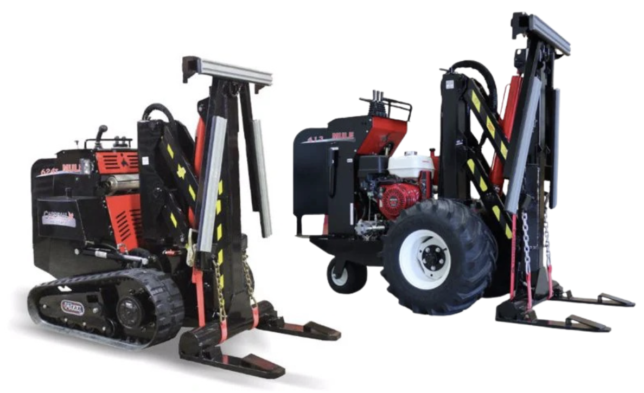
“Mules” used to move buildings.